
Only an Architect Owns the Title in Victoria, So Ask Any Other Designer Which Register They Are On
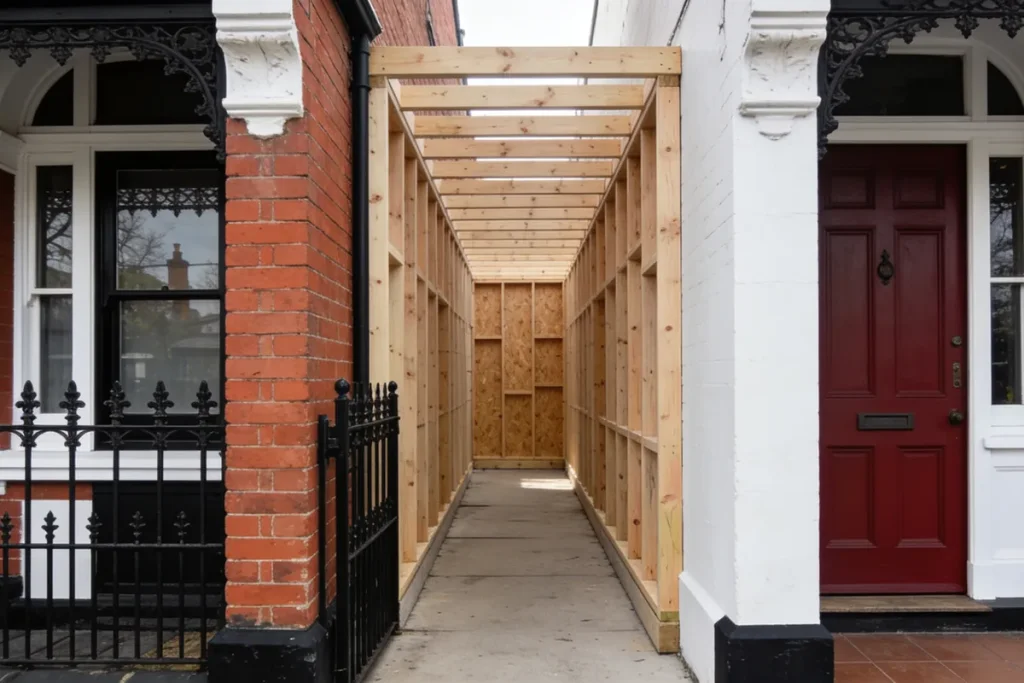
Picture a couple in an inner-north terrace on a Saturday morning in early spring, with a hand-sketched floor plan for a rear extension spread across the kitchen table. Beside it sit three business cards from three people they have spoken to. One says architect. One says building designer. One says interior designer. The sketch is good, and the couple like all three people. The question is a plain one: who is actually allowed to turn this into drawings?
Our position is that only one of those three titles is reserved outright by Victorian law, and it is architect. So hire from a register: an architect on the Architects Registration Board of Victoria’s register, or a building designer registered with the Building and Plumbing Commission, and put the registration number in writing before any drawing is made. This is general information, not legal advice, and it covers Victoria only.
Architect vs building designer: the title only one of them owns
The Architects Act 1991 (Vic) is blunt about the word. A natural person must not represent themselves as an architect unless they are registered (s 4). What counts as representing is wider than the word itself: a title “capable of being understood” as meaning architect counts, and so does a statement that someone provides the services of an architect (s 7).
The Act also protects a set of phrases. Under s 8, anyone who is not a registered architect, an approved partnership or an approved company must not use “architectural services”, “architectural design services” or “architectural design” for designing buildings or preparing plans, drawings or specifications. There are narrow exceptions in s 8A, including “landscape architect”, “naval architect” and “computer systems architect”. An architect must also hold the required insurance to work as one (s 8B). The Architects Registration Board of Victoria, or ARBV, puts the consumer version simply: if they are not registered with the ARBV, they are not an architect.
Take a made-up website to see how this works. It belongs to a business whose owner is not on the register and whose business is not an approved company or partnership. Its home page says “architectural design services, from concept to permit”. On our reading of s 8, that phrase is exactly what the section restricts, because it is used for designing buildings and preparing drawings. The owner may be talented and the drawings may be fine, but the wording is the problem.
Companies and partnerships have a parallel approval, which the ARBV lets you check. Interstate architects working under automatic mutual recognition sit on a separate ARBV list rather than the main register. The ARBV also takes complaints about conduct, and about people or bodies that are not registered but represent themselves as architects.
Building designer is a registered category, and its old name was draftsperson
A building designer is a different thing, and it is regulated differently. The Building Act 1993 (Vic) notes that the category once called draftsperson, a person who carries on a business of preparing plans for building work or documentation relating to permits, was renamed building designer. You will still hear “draftsperson” at the counter.
Section 169 of the Act says a person who is not registered in a category or class must not represent or imply that they are. The Building Regulations 2018 (Sch 9, cl 5) set three classes of building designer: building design (architectural), building design (interior) and building design (services). Each class has its own prescribed qualifications and experience, which we do not reproduce here, because the Regulations were amended in 2026 and the detail is for the register, not a blog.
Consumer Affairs Victoria’s plans and permits page says designers and draftspeople who prepare drawings for construction must be registered with the building regulator. Consumer Affairs Victoria also says designers and draftspeople can design and draft plans, and can arrange engineering computations, foundation data and planning and building permits on your behalf. A registered building designer is an ordinary route for many renovations.
Where the sources disagree on unregistered drawings
Here the sources part company, and it is better to say so than to smooth it over.
Consumer Affairs Victoria’s plans and permits page, last updated on 8 July 2025, says designers and draftspeople “cannot prepare drawings or specifications for building construction works” unless they are registered (as architects with the ARBV, or as designers with the building regulator) and hold professional indemnity insurance.
The Act and Regulations we opened say something narrower. Section 169 forbids claiming registration without it. Section 169D forbids unregistered people doing work “of a kind prescribed” for a category or class. The Building Regulations (version 031, in force at the start of September 2026) prescribe kinds of work for building surveyors and for building inspectors. We found no prescribed work for building designers. That is a statement about what we read, not about the law. We could not find the provision the Consumer Affairs Victoria sentence rests on.
So which do you follow? The cautious, official reading: Consumer Affairs Victoria’s, together with the register. If it is right, hiring from the register is required. If the Act text we read is the whole story, hiring from the register costs you nothing, whereas an unregistered drawer could leave you holding plans that cannot be used. There is a fair point on the other side. Many unregistered designers draw well, and a register number is not a quality mark. What it adds is insurance, a conduct framework and somewhere to complain.
Interior designer: an open title with a registered class beside it
The question people actually type is whether their interior designer may draw a wall. We can offer a route, not a verdict.
The title “interior designer” is not reserved by any law we opened. Nothing we read stops a person calling themselves one. But the Regulations also list a registered class, building design (interior), and the Regulations we read set that class’s qualifications without describing what it may draw. We do not know from anything we opened where that class ends.
So the practical sequence is short. Ask the interior designer whether they hold the registered class, and what their number is. Ask whether it covers the drawings your work needs. Then ask the building surveyor what the permit application requires. If you want to see who offers interior design before you ask, Search Melbourne's interior designer listings are a place to browse, but a listing is not a registration, so check any name you shortlist.
A stylist who never draws for a permit may need none of this. That is a good question to put to the building surveyor rather than a rule we can state.
Three titles at a glance
| Title | What protects it | Where to check |
|---|---|---|
| Architect | Architects Act ss 4, 7, 8: the title and the phrases “architectural services”, “architectural design services” and “architectural design” | The ARBV register; a separate ARBV list for interstate architects |
| Building designer | Building Act s 169; classes set in the Building Regulations | The Building and Plumbing Commission’s practitioner search |
| Interior designer | No reserved title found in what we opened. The registered class is “building design (interior)” | The same practitioner search, under the registered class |
Questions to put to any designer before they draw
This is our checklist, not an official list.
- Which title or class do you hold, and what is your registration number?
- Where can I look you up?
- What insurance do you hold, and can I see the certificate? (Consumer Affairs Victoria names professional indemnity insurance.)
- Will there be a written agreement before work starts, and are fees a lump sum or an hourly rate? (The ARBV says an architect must not start work until you have both entered a written agreement. Consumer Affairs Victoria says designers should provide a written contract.)
- Which stages are included: concept, permit drawings, construction documentation?
- Who lodges the permit paperwork and deals with the council and the building surveyor?
- Who arranges the engineering? If the drawings call for new pipework, how to choose a plumber is worth a read before the plans are final.
- What may I do with the drawings? Consumer Affairs Victoria says the designer holds copyright, so the plans can be used once and only for the site they were drawn for, unless you agree otherwise.
If you would rather start with a shortlist, Search Melbourne's architect listings are a starting point. Treat a listing as an introduction. The ARBV register is where you confirm it.
Not every renovation starts with drawings
Before any designer is hired, two questions come first, and neither is about drawings. Consumer Affairs Victoria says to ask your council whether you need a planning permit, which comes before a building permit. A registered building surveyor, your council or the regulator can tell you whether a building permit is needed. The building surveyor then checks the plans against the Building Regulations.
For an older house, the overlay on your street can change the order of play. Our post on renovating a heritage home in Melbourne covers the overlay, the permit and who to hire, and it is worth reading before the first sketch is turned into anything formal.
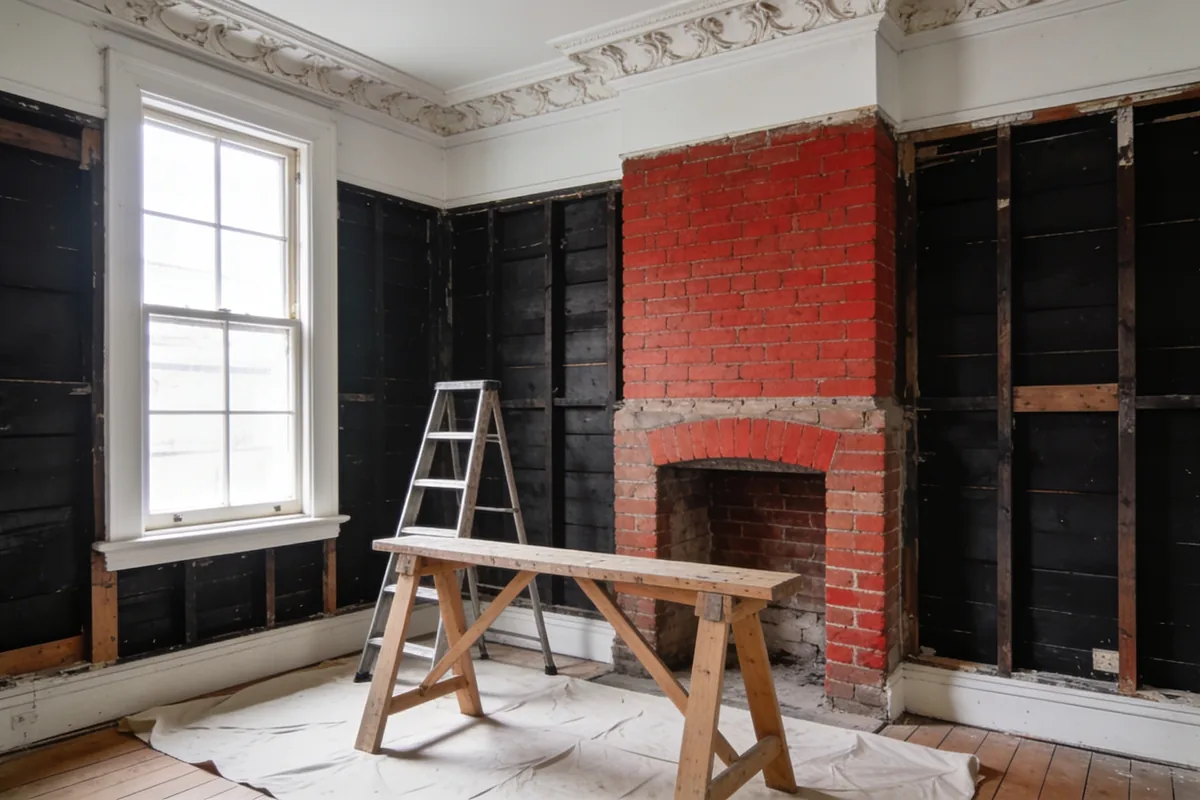
That stripped-back stage, with bare studs and the plaster cornice still overhead, is where most renovations begin. The drawings come after the questions, not before.
A register number before a sketch
An architect is the only one of the three titles that Victorian law reserves outright, so check the ARBV register. A building designer is a registered category with three classes, so check the Building and Plumbing Commission’s practitioner search. An interior designer holds an open title, so ask whether they hold the registered class and what it covers. Put the number in writing first. Then the sketch on the kitchen table can become a set of drawings you can use.
Sources: Architects Act 1991 (Vic), version 050 (https://www.legislation.vic.gov.au/in-force/acts/architects-act-1991/050); Building Act 1993 (Vic), version 152 (https://www.legislation.vic.gov.au/in-force/acts/building-act-1993/152); Building Regulations 2018 (Vic), version 031 (https://www.legislation.vic.gov.au/in-force/statutory-rules/building-regulations-2018/031); Building plans and permits, Consumer Affairs Victoria (https://www.consumer.vic.gov.au/housing/building-and-renovating/plan-and-manage-your-building-project/plans-and-permits); Architectural process explained, Architects Registration Board of Victoria (https://www.arbv.vic.gov.au/working-architect); Search for an architect, Architects Registration Board of Victoria (https://www.arbv.vic.gov.au/find-architect)