
Painters in Melbourne: What a Proper Painting Quote Spells Out
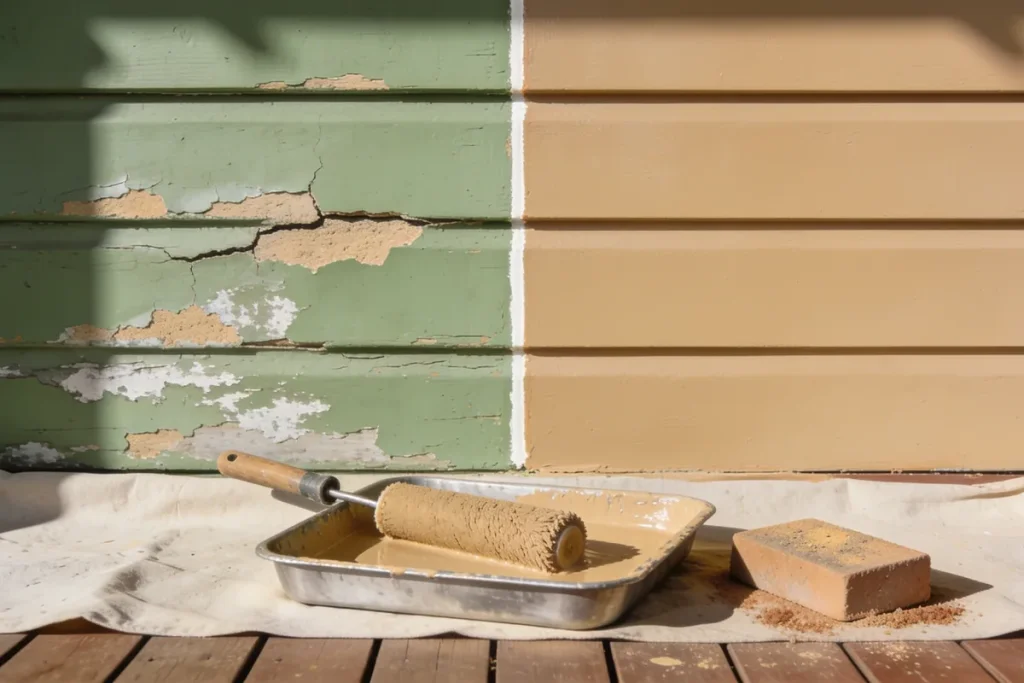
You asked three painters to quote on the same house, and the three numbers that came back are so far apart they could be for three different houses. If that is where you are, please do not feel silly. It is a very common situation, and it does not necessarily mean anyone is trying it on. Often the painters are simply not quoting the same job. One has allowed for proper prep and two coats of a good paint, another has allowed for one coat over a quick sand, and the third has not said either way. Once you know what to look for, you can turn three confusing numbers into three quotes you can compare properly. This guide takes it one step at a time. It is general information, not legal advice.
Why painting quotes differ so much
A painting quote is really a bundle of decisions, and each painter makes them a little differently. The big ones are:
- the scope: which rooms and which surfaces are included
- the preparation: how much washing, sanding, filling and repairing is allowed for
- the product: which paint, and how good it is
- the number of coats on each surface
- access and height: a double-storey exterior or a stairwell takes more time and gear
- how busy the painter is
Access and height are easy to overlook from the ground. A double-storey exterior may need scaffolding or a lot of ladder work, and a high stairwell inside takes longer than its size suggests, so do not be surprised if those parts of the job are priced on their own.
The last item on the list surprises people. A painter who is already booked for months may quote high, because they do not need the job. That is not dishonest. It is just one more reason the numbers can sit so far apart.
The way through is to lock in the first few decisions yourself. One reader put it neatly: the three main variables are which paint, how many coats and how good a job, so lock in the first two and make sure everyone is quoting exactly the same thing. Once the scope, the paint and the coats are the same on every quote, the remaining differences start to mean something.
The easiest way to get there is to walk through the house with each painter. Point out the cracks you know about, the patch of peeling paint in the bathroom, the doors that have been knocked about. Tell each of them the same things. A painter who looks closely, runs a hand over the walls and asks questions is usually pricing the job properly, and you will learn a lot from what they notice that you had not.
What a proper quote spells out
A good painting quote does not need to be long, but it does need to be specific. Start with where the paint is going. Inside, that means the walls, ceilings, trims, doors and windows. Outside, it means the cladding, eaves, fascias and anything else that is being painted. If a quote says “interior repaint” and nothing more, it is fair to ask what is in and what is out.
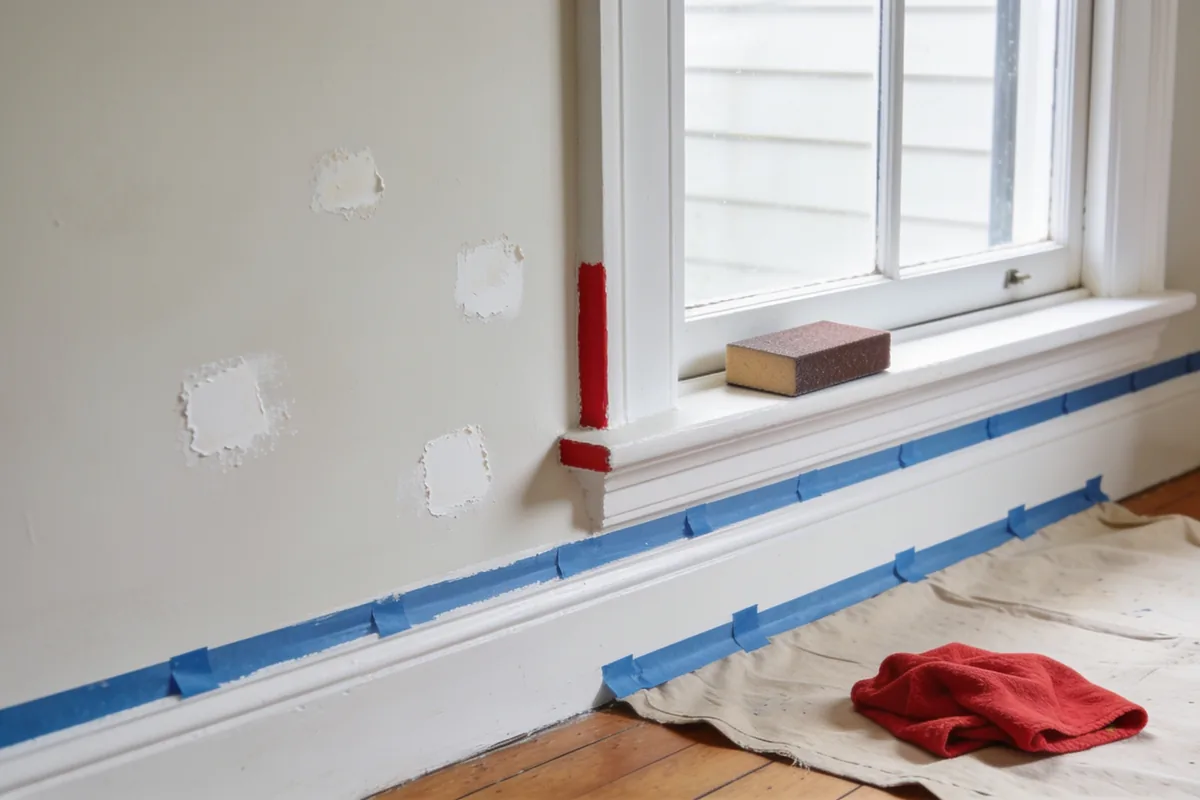
Next comes the preparation, and this is the line I would read most carefully. Washing down, sanding, filling holes and cracks, caulking gaps, spot-priming bare patches and any small repairs all take time, and that time is where much of the difference between a good job and a tired one comes from. A quote that leaves prep out entirely has left out a large part of the job.
Then the paint itself. A proper quote names the brand, the range and the sheen for each surface, so you know exactly what is going on your walls. It also gives the number of coats on each surface, rather than a single “two coats” for the whole house. If you are changing colour, especially from dark to light, extra coats may be needed, and a good quote says whether they have been allowed for.
Finally, the practical side. Who moves the furniture, and how will floors and benches be covered? What happens to the drop sheets, old tins and leftover paint at the end? When does the job start, how long should it take, and how will payments be spread? And does the painter offer a warranty on their workmanship, and for how long?
Here is all of that as a quick comparison you can keep beside the quotes:
| Line on the quote | What good looks like | A gentle red flag |
|---|---|---|
| Rooms and surfaces | Each room and surface listed | “Interior repaint” with no detail |
| Preparation | Wash, sand, fill, caulk, spot-prime, repairs spelled out | No mention of prep at all |
| Paint | Brand, range and sheen named for each surface | “Quality paint” with nothing named |
| Coats | A number for each surface | “Two coats” with no surfaces mentioned |
| Colour change | Extra coats allowed for where needed | Silence on a dark-to-light change |
| Furniture and protection | Who moves what, and how things are covered | Not mentioned |
| Clean-up | Drop sheets, tins and leftover paint dealt with | Not mentioned |
| Timing | A start date and an expected duration | “Soon” |
| Payment | A clear schedule | A large upfront payment with no schedule |
| Warranty | Workmanship warranty stated | None offered |
If part of the job is painting or staining a fence you share with a neighbour, that is a conversation with the neighbour before it is a line on a quote. This site’s guide to shared fences in Melbourne explains how to start it.
What “two coats” leaves out
“Two coats” sounds like a promise, and in a way it is. But two coats over poor preparation is still a poor job. Paint will not hide a crack that was never filled, and it will not stick well to a glossy surface that was never sanded.
So when a quote says two coats, it is worth asking two gentle follow-up questions. First, what preparation is included on each surface? Second, is the undercoat or primer counted as one of the two coats? Some painters count it and some do not, and it makes quite a difference to what ends up on your walls.
If you would like to know what good practice looks like, the reference is AS/NZS 2311:2017, the Australian and New Zealand guide to the painting of buildings. You do not need to read it yourself. It is enough to know that it exists, and that a professional painter should be working to it. Asking whether they do is a perfectly reasonable question.
Registration in Victoria: what to check, and when
This part confuses a lot of people, so let us take it slowly.
Consumer Affairs Victoria explains that, as a general rule, a builder or tradesperson doing domestic building work worth more than $10,000 must be registered with the Building and Plumbing Commission (BPC). But there is an exception for work that involves only one trade, and painting is on that list. So if your job is painting only, the painter does not need to be registered, even if the quote is over $10,000. Nothing is wrong if your painter is not registered for a painting-only job.
Registration does come back into the picture in two situations. The first is when painting is combined with another trade. Consumer Affairs Victoria’s own example is plastering and painting together. The second is when the work needs a building permit. In either of those cases, if the work is over $10,000, you are dealing with someone who should be registered, and you can check them on the BPC’s Find and check a practitioner search.
It can help to picture it with a real job. Say you are having a cracked ceiling replastered and the room repainted. That is two trades, plastering and painting, so if the work is over $10,000 the person doing it should be registered. Now say you are only having the same room repainted, with no plastering at all. That is painting only, and as long as the work needs no building permit, registration is not required, whatever the price. The difference is the scope of the work, which is one more reason to have the scope written down clearly.
Consumer Affairs Victoria also explains that from 1 July 2026, Home Warranty insurance applies to domestic building work worth more than $20,000. Whether that applies to the job in front of you depends on what the job is, so if your project goes beyond painting, ask the tradesperson directly whether it applies, and ask to see the details if it does.
For a painting-only job, there is no registration number to look up, which is exactly why the paperwork matters so much. Ask for:
- proof of public liability insurance
- an ABN
- references from recent jobs, ideally similar to yours
- a written quote that spells out everything in the list above
With no register to check, that written quote is your best protection.
Lead paint in older Melbourne homes
Melbourne has a great many older houses, and many of them have layers of paint going back decades. Some of those layers may contain lead.
The Australian Government’s Lead Alert guide to painting your home says that houses built before 1970 are the most at risk of having lead paint, although newer homes may have it too. If your home is older, it is worth raising before any work begins.
Ask your painter how they test for lead paint, and how they handle it if they find it. The Lead Alert guide is clear in general terms that methods like dry sanding and burning off are to be avoided on paint that might contain lead, because of the dust and fumes they create. A careful painter will be happy to talk you through their approach. If they wave the question away, that tells you something.
If testing does point to lead, it is worth asking a few more questions before work starts. How will the painter contain the dust? How will they clean up at the end of each day? Should anyone in the household, particularly young children or anyone who is pregnant, be somewhere else while the old paint is being disturbed? A painter who has dealt with older homes before will have thought about all of this already.
Some older homes are also covered by heritage controls, which can bring their own questions about colours and what can be changed on the outside. If your home is in a heritage area or carries an overlay, this site’s guide to renovating a heritage home in Melbourne covers the questions to ask before you choose your colours.
Comparing the three quotes
Now you can go back to those three quotes with fresh eyes.
Start by making them match. Ask each painter to quote the same rooms and surfaces, the same paint and the same number of coats, with the prep spelled out. Some may need to send you a revised quote, and that is perfectly normal. If a painter explains a change over the phone, ask them to put it in the revised quote as well, so that everything you are comparing is in writing. Then compare:
- the price
- the start date
- the warranty
At that point, the differences are real differences. One painter may simply be busier, or more expensive, or offer a longer warranty. You can decide what matters most to you.
And if one quote is much lower than the others and still does not name a product? That is the one to ask about. It may be fine, but it may also mean a cheaper paint or fewer coats than you were expecting. A gentle question now saves a disappointing wall later.
Same paint, same coats, then compare
You do not need to know anything about painting to compare painting quotes. Ask every painter to quote the same rooms, the same paint and the same number of coats, with the preparation written down. Check for public liability insurance, an ABN and references, and remember that for a painting-only job, registration is not required. If painting is combined with another trade or needs a building permit, that changes, and you can check the practitioner with the BPC. If your home was built before 1970, ask about lead before anyone picks up a sander.
Do those things, and three confusing numbers become three quotes for the same job. From there, the choice comes down to price, timing, the warranty and the painter you feel most comfortable having in your home.
Sources: Consumer Affairs Victoria, About builders, tradespeople and other building practitioners (https://www.consumer.vic.gov.au/housing/building-and-renovating/plan-and-manage-your-building-project/about-builders-tradespeople-and-other-building-practitioners); Australian Government, Lead Alert: the six step guide to painting your home, 5th edition (https://www.agriculture.gov.au/sites/default/files/documents/lead-paint-fifth-edition.pdf); Standards Australia, AS/NZS 2311:2017 Guide to the painting of buildings (https://store.standards.org.au/product/as-nzs-2311-2017)