
Victorian Energy Upgrades: Check the Accredited Provider Before a Discounted Install
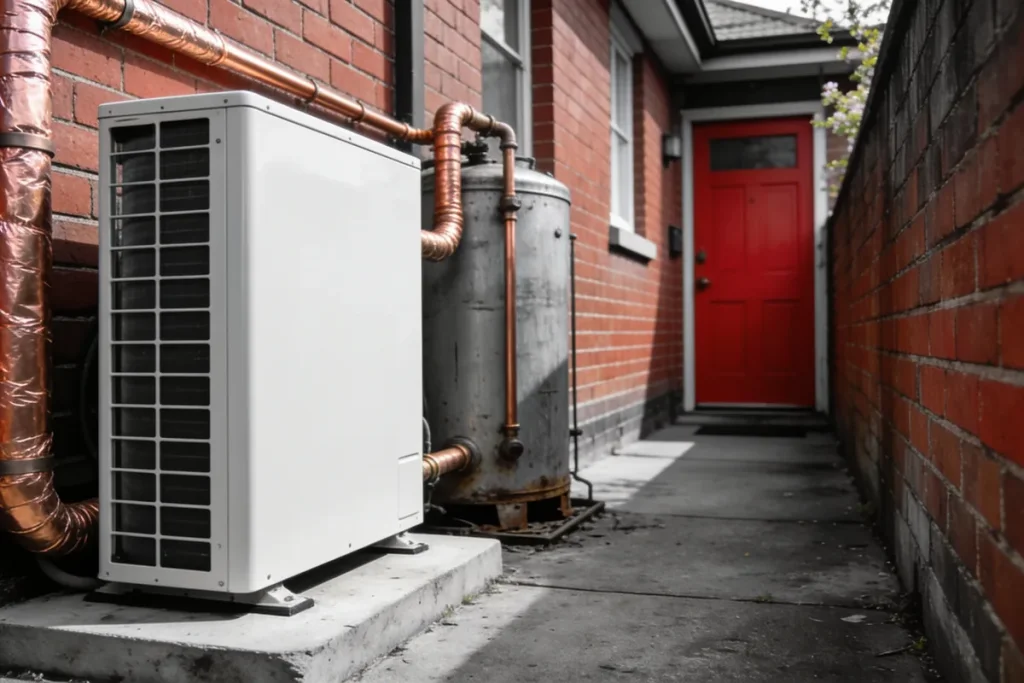
The offer is usually specific: a heat pump hot water system, a reverse-cycle split system or a set of LED downlights, installed for a price well below what the same product would cost at retail. For many Melbourne households, that price is genuine. It reflects a discount funded through the Victorian Energy Upgrades program, a state scheme in which accredited businesses take part legitimately. The difficulty is that a low price, on its own, does not show who is offering it, whether they are entitled to, or how they came to be offering it. That question is the one worth answering first, and it can be answered in a few minutes with public information.
Most household discussion of the program concentrates on a single figure: how large the discount will be on a split system, a ducted system or a hot water unit. Far less attention goes to the business offering it. That imbalance is understandable, since the discount is the visible part of the offer. It is also the part that tells a household least about whether the offer is sound. The sections below take the mechanism first, then the rules on how offers may be made, then the checks.
How the discount works
The discount is not a rebate paid to the household. It is built into the price by the business.
The Essential Services Commission (ESC), which administers the program, explains the mechanism. Accredited businesses carry out energy efficiency upgrades, and those upgrades entitle them to create Victorian energy efficiency certificates. The business then sells those certificates, and the value it receives is what allows it to offer the product and installation at a reduced price.
Three consequences follow from that structure:
- The discount depends on accreditation. Only an accredited business can create certificates, so only an accredited business can offer a program discount.
- The discount is the business’s offer. Because it comes from what the business receives for its certificates, the discount on the same product can differ from one provider to the next.
- Participation is voluntary. No household is required to take part, and no household is required to accept an offer because the program is involved.
The third point matters more than it appears. A sales approach that implies the upgrade is compulsory, time-limited by the government or required for the home is not describing the program the ESC describes.
The mechanism also explains why a low price is not, by itself, a warning sign. A reduced price is what the discount produces, so an accredited provider and a business misrepresenting the program can quote similar figures. The price will not tell them apart, but the provider’s name on the ESC’s register will.
The bans that matter
The ESC sets out two marketing bans that now apply to the program, both relevant to how an offer reaches a household:
| Practice | Status | From |
|---|---|---|
| Cold-call telemarketing | Banned | 1 May 2024 |
| Doorknocking | Banned | 1 August 2024 |
The rule beneath both is that businesses may not phone or visit a consumer to market the program unless the consumer has given prior consent. An unsolicited call or knock at the door about Victorian Energy Upgrades, from someone the household has never contacted, therefore falls outside what the program permits.
The ESC also states that accredited providers, and any third parties acting on their behalf, must follow the program’s code of conduct. The code covers the whole transaction: marketing, contracts and installation. That second element is important. A provider cannot avoid its obligations by outsourcing the sales call to another company, since the third party is bound as well.
In practice, the most useful question for any caller or visitor is how they came to be contacting this household. A household that asked to be contacted, for example by requesting a quote, is in a different position from one that did not. Where the answer is unclear, the conversation can end there, and the household can approach an accredited provider itself later.
Checking the provider
The checks below take minutes and rely entirely on public sources.
- Search the ESC’s list of accredited providers. The ESC provides a search for accredited providers and maintains public registers for the program. Search for the business named on the offer.
- Match the names exactly. Compare the business name on the quote, invoice or contract with the accredited name on the register. A trading name, a different company name or a missing business name are each a reason to ask a follow-up question before proceeding.
- Ask who installs. Many upgrades involve electrical or plumbing work. Ask whether the installer is a licensed electrician or licensed plumber, and confirm that the matching certificate will be provided at the end of the job: a Certificate of Electrical Safety for electrical work, and a compliance certificate for plumbing work.
- Keep the paperwork. Retain the quote, the contract and the certificates together.
If the business named on the offer cannot be found on the ESC’s search, the sensible course is to pause rather than to assume an error. Ask the business, in writing, for the accredited name it operates under, then search again. A provider that is accredited can answer that question easily. One that cannot, or that changes the subject to the size of the discount, has given the household the information it needed.
The third check is the same one that applies to any licensed trade in Victoria, discounted or not. This site’s guide to choosing a plumber in Melbourne sets out how to check a plumbing licence and what the compliance certificate is for, and it applies directly to a heat pump hot water installation.
The enforcement record
The rules are enforced. On 30 January 2026, the ESC announced that Target Green Pty Ltd had been suspended from the Victorian Energy Upgrades program for three months, over alleged false claims and banned sales activity, including doorknocking and high-pressure tactics.
The case is useful for what it shows rather than as a reason for alarm. It demonstrates that the doorknocking ban and the code of conduct are acted on, and that a business can lose its ability to participate. It also illustrates the specific conduct the regulator treats seriously: claims a household cannot verify, contact the household did not ask for, and pressure to decide quickly. A household that recognises those three features in an offer has a clear reason to stop and check.
Comparing the offer
Once the provider is confirmed, the offer can be assessed like any other quote, with the discount as one line rather than the whole story. An itemised quote should show:
| Line | What to look for |
|---|---|
| Product | The make and model number, so it can be compared elsewhere |
| Program discount | Shown as a separate line, not folded into a single price |
| Installation | What the installation includes, and who carries it out |
| Removal of the old unit | Whether the existing system is removed and disposed of |
| Warranty | The product warranty and the installation warranty, separately |
The value of itemisation is comparability. A second accredited provider quoting the same model can then be compared line by line, and the effect of the discount on each can be seen. Where one quote shows only a final figure, it is reasonable to ask for the breakdown before deciding.
A second quote from another accredited provider gives the household a reference point that a single offer cannot. The model number earns its place on the quote a second time on installation day: the product installed should be the one quoted, and a substitution should be explained and agreed before the work goes ahead, not discovered afterwards.

If you were cold-called or doorknocked
The steps for an unsolicited approach are straightforward.
- Do not sign on the spot. Participation is voluntary, so there is no reason to decide during a phone call or on the doorstep.
- Report it to the ESC. The ESC administers the program and the marketing bans, so an unsolicited call or visit about the program can be reported to it. Note the business name, the date and what was said.
- Contact Consumer Affairs Victoria about a contract. Where a household has already signed and has concerns about the agreement, Consumer Affairs Victoria can help with the contract side.
A household that does want an upgrade loses nothing by declining an unsolicited offer. It can approach accredited providers directly, on its own timing, and compare quotes from more than one. The same principle applies to other household electrical upgrades, where the installation starts with the electrician’s assessment rather than the product. This site’s guide to home EV charger installation in Melbourne follows that order for a different job.
Check the name, then the price
The Victorian Energy Upgrades discount is real, and an accredited provider offering it is doing what the program intends. The checks exist to confirm which kind of offer is in front of the household. In summary:
- The discount comes from certificates that only accredited businesses can create and sell, and participation is voluntary.
- Cold-call telemarketing has been banned since 1 May 2024 and doorknocking since 1 August 2024, unless the consumer gave prior consent.
- Providers and their third parties must follow the code of conduct across marketing, contracts and installation.
- The business name on the quote should match an accredited provider on the ESC’s search and registers.
- The installer should be licensed, with the matching certificate at the end.
- The quote should itemise the product model, discount, installation, removal and warranty.
Confirm the name first. Compare the price second.
Sources: Your consumer rights in the Victorian Energy Upgrades program, Essential Services Commission (https://www.esc.vic.gov.au/victorian-energy-upgrades/energy-saving-information-consumers/your-consumer-rights-victorian-energy-upgrades-program); Businesses punished for breaking Victorian Energy Upgrades program rules, Essential Services Commission (https://www.esc.vic.gov.au/media-centre/businesses-punished-breaking-victorian-energy-upgrades-program-rules-including-illegal-doorknocking)