
A Blind Installer Is Bound to Secure the Cords, and Victorian Rental Providers Have Been Since December 2025
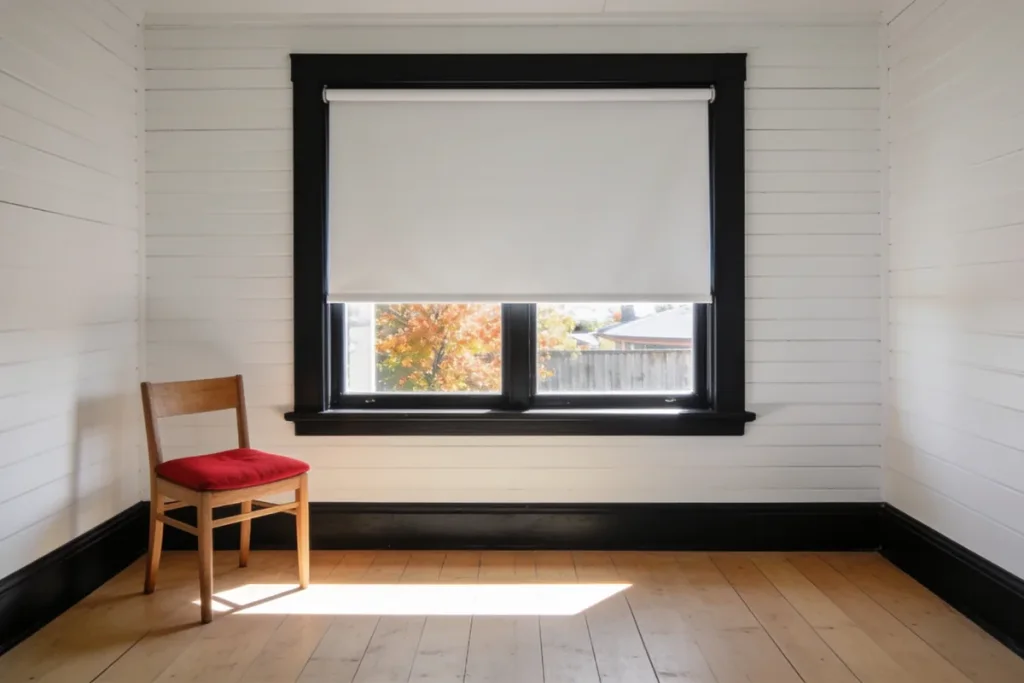
Two separate rules bind two different parties, and a blind quote should reflect the first of them. A person who installs corded blinds in a domestic dwelling is bound by a national installation standard, in force since 1 January 2015. A Victorian rental provider is bound by a separate state rule that has applied since 1 December 2025, and it reaches every corded blind in the property, whenever it was fitted. The practical result is that a quote for corded blinds should say how the cords will be secured, and a renter should know what the rental provider is required to have done.
This article sets out the three rules side by side, what the installer has to do under the standard, what a blind quote should say, where fitting your own blinds and pre-2015 blinds stand, and what the rental rule requires. It is general information, not legal advice.
Three rules, three parties, one table
It is easy to talk about “the standard” as if there were one. There are three layers, and each binds someone different.
| Rule | Where it comes from | Who it binds | In force |
|---|---|---|---|
| Supply standard | The 2010 supply regulations (Product Safety Australia) | Suppliers: a warning label on retail packaging, a warning label or swing tag on the cord, installation instructions, and any components the instructions name | In force; no date shown on the Product Safety Australia page |
| Installation standard | Competition and Consumer (Corded Internal Window Coverings) Safety Standard 2014; applies to domestic dwellings, not caravans, mobile homes or boats (s 4) | Installers, because installation in trade or commerce must comply (Explanatory Statement) | 1 January 2015 (s 2) |
| Victorian rental rule | Consumer Affairs Victoria (CAV), minimum standards for rental properties | Rental providers, who commit an offence if a new renter moves into a property that does not meet the standard (CAV) | 1 December 2025 |
Read in order, the table shows a division of labour. The supplier’s duty is about what arrives in the box, the installer’s duty is about what ends up on the wall, and the rental provider’s duty is about what is hanging in a tenanted home on any given day. A single blind can be touched by all three, which is why the quote, the packaging and the property each tell part of the story.
The Victorian rule exists to close a gap. CAV says the existing Commonwealth standard “only applies to blinds and curtains installed from 2015 onwards”, so a blind fitted before then falls outside it, while the rental rule applies regardless of the date of installation. CAV adds, as background, that unsecured cords claim one or two Australian children every year and that at least 21 young children have died since 2001.
What the installer has to do
Sections 6 and 7 of the 2014 standard set the installer’s duties. In plain terms:
- The loop test (s 6(1)(a)). A corded internal window covering must be installed so that a loose cord cannot form a loop 220 mm or longer at less than 1,600 mm above floor level.
- The components (s 6(1)(b) and s 6(2)). Any components the instructions specify as necessary for cord safety must be used, and the instructions on the retail packaging must be followed.
- The cleat (s 6(4)). A cleat must be at least 1,600 mm above the floor.
- The cord guide (s 6(3)). No part of a cord guide may sit lower than 1,600 mm unless it stays firmly attached to the wall or structure when pulled with 70 N in any direction for 10 seconds, and the cord is secured or tensioned so that no 220 mm loop can form.
- The label (s 7(1)(a)). The installer attaches a label showing the name and contact details of the person or company responsible.
- The warning tag (s 7(1)(b)). The warning label or swing tag on the cord stays attached.
“Cord” is defined broadly in s 5: a rope, strap, string, chain, line or wire. A bead chain on a roller blind counts.
A ruling on “keep cords above 1.6 metres”. One way of stating the rule is that cords should be kept above 1.6 metres. The instrument is more exact, and the difference matters. The test is whether a loose cord can form a loop of 220 mm or longer below 1,600 mm, a cleat must itself be at least 1,600 mm up, and a cord guide lower than that qualifies only if it passes the 70 N, 10 second test and the cord is secured or tensioned. The slogan works as a rule of thumb, but an installer is measured against the standard, so quote the standard.
To see the test applied, take a made-up installation: a roller blind with a looped bead chain on a bedroom window. All figures below are the standard’s.
| Case | Fitting | Reads as |
|---|---|---|
| A | A cleat screwed to the frame with its bar 1,450 mm above the floor | Fails. A cleat must be at least 1,600 mm up (s 6(4)), even if the chain is wound neatly |
| B | A cleat at 1,650 mm, the chain wound around it | Passes on height, and the chain cannot form a loop of 220 mm or longer below 1,600 mm |
| C | A tensioning cord guide at 1,100 mm | Allowed below 1,600 mm only if it stays firmly fixed under 70 N for 10 seconds and the cord is secured or tensioned so that no 220 mm loop forms (s 6(3)) |
What a blind quote should say
The standard sets requirements for the installation, so the quote is the natural place to see whether the installer has planned for them. For corded blinds, a quote that covers the ground should address six points.
| What the quote should show | Why |
|---|---|
| Whether each blind is corded or cordless | A cordless blind has no cord to secure, so the rest of this table applies only to corded ones |
| Which cord-safety components are included for each corded blind, and how many | CAV’s guidance is one device and one screw per cord |
| Where they will be fixed, in the standard’s terms | A cleat at least 1,600 mm up; any guide lower than that fixed to the 70 N test (s 6(3), s 6(4)) |
| That the installer’s label with name and contact details will be attached, and the warning tags left on | s 7(1) |
| That the work follows the instructions that come with the blind | s 6(2) |
| Whether existing blinds in the same room or house are being secured too, or only the new ones | The installation standard covers what the installer fits; older blinds are a separate decision |
The checklist is for corded blinds; a quote for cordless blinds can skip most of it. None of these needs a price, a brand or a warranty claim. They are statements of method, and a fitter who works to the standard can usually give them in a sentence each. The same habit, getting a name and a way to contact the person who comes to your home, appears in our guide to choosing a locksmith in Melbourne.
If the quote is for blinds only and you are still looking for businesses, you can browse curtain and blind businesses on Search Melbourne.
Fitting your own blinds
The installation standard attaches to installation in trade or commerce. That is the wording of its Explanatory Statement, which says the Australian Consumer Law prohibits installation in trade or commerce that does not comply. The statement does not extend the duty to a householder fitting a blind at home. The supply standard works separately: it requires warning labels, instructions and the cord-safety components to come with the product, and Product Safety Australia describes a packaging warning that cords have caused the death of young children. The legal duty to fit safely therefore falls on a trader who installs, but the hazard is identical for a do-it-yourself fitting, and the same height and loop thinking applies.
For Victorian households, CAV offers a free curtain and blind cord safety kit to Victorian mailing addresses. Its limits are specific. The supplied device suits roller blinds with looped cords and wooden window frames only, so other blinds, curtains or frames need suitable devices from a hardware retailer. CAV’s method is one device and one screw per cord: pull the cord through the device, pull the device down until the cord is tight, then screw it into the frame. If you are unsure, CAV says to consult a registered tradesperson.
If you rent in Victoria
Since 1 December 2025, all corded internal window coverings in a Victorian rental property, blinds and curtains included, must have an anchor installed to secure the cords and prevent loops (CAV, minimum standards). CAV uses the word “anchor”, and this article does the same. The rule applies regardless of when the blind was installed, which closes the pre-2015 gap described above.
For a renter, the position is as follows:
- A rental provider commits an offence by letting a new renter move into a property that does not meet the standard.
- A renter can request an urgent repair if the cords are not secured.
- A renter can fit a safety kit without the rental provider’s permission.
For a rental provider, the task is to check every room, including older blinds, since the rule has no exemption for installation date. For an owner-occupier with pre-2015 blinds, the installation standard does not reach them, but the hazard is the same, and CAV’s advice is to check older blinds first.
Cordless, shutters and other routes
The fair point for a retailer who recommends cordless products is that they remove the loop entirely. The standard is written for corded coverings (the s 5 definition), so a cordless blind has no cord to secure, and for a purchase made from scratch it is the simplest option. Everything above is for the corded blinds that people already have or still choose. Shutters carry no cords and are a different quote altogether.
Start measuring from the floor
Three measures are worth carrying out of the room when the fitter leaves: 1,600 mm, 220 mm and the label. A cleat at least 1,600 mm up, no loose cord able to form a loop of 220 mm or longer below that height, and an installer’s name and contact details on the label. If a rental has corded blinds, the same question applies from the provider’s side: is every cord anchored? The standard and the rental rule are both specific enough to check with a tape measure and a quote. As a reminder, this is general information and not legal advice, and for a particular installation or tenancy, Consumer Affairs Victoria is the place to ask.
Sources: Competition and Consumer (Corded Internal Window Coverings) Safety Standard 2014, F2014L00363 (https://legislation.gov.au/F2014L00363/asmade/2014-03-28/text/original/pdf); Explanatory Statement to F2014L00363 (https://legislation.gov.au/F2014L00363/asmade/2014-03-28/es/original/pdf); Product Safety Australia, Blinds, curtains and window fittings mandatory standard (https://www.productsafety.gov.au/business/search-mandatory-standards/blinds-curtains-and-window-fittings-mandatory-standard); Consumer Affairs Victoria, Order a curtain and blind cord safety kit (https://www.consumer.vic.gov.au/consumers-and-businesses/products-and-services/product-safety/curtain-and-blind-cord-safety); Consumer Affairs Victoria, Rental properties minimum standards (https://www.consumer.vic.gov.au/housing/renting/repairs-alterations-safety-and-pets/minimum-standards/minimum-standards-for-rental-properties); Consumer Affairs Victoria, Are your curtain and blind cords safe? (https://www.consumer.vic.gov.au/latest-news/are-your-curtain-and-blind-cords-safe)