
Choosing a Tow Truck in Melbourne: The Capped Price, the Authority to Tow and What to Ask First
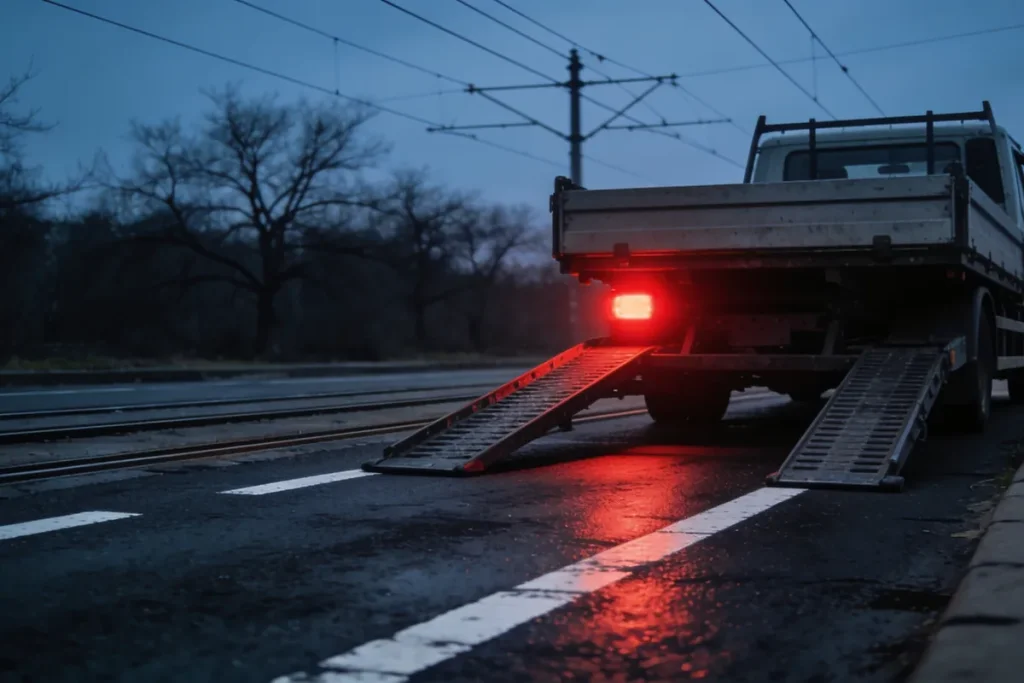
The anomaly is worth stating plainly at the start, because it is useful and very few readers know it. Accident towing in metropolitan Melbourne is price-regulated. It has a published maximum structure, recommended on a review cycle and published by the state. Almost every other tow in Victoria does not. A breakdown, a trade tow, a vehicle moved at a repairer’s request, or a tow carried out beyond the metropolitan area simply has to be reasonable, with no set maximum at all.
That single fact changes where the reader stands. In most of the trades covered on this site, the protection available to a consumer is a written quote and a careful comparison. For an accident tow inside the area Transport Victoria defines as the Melbourne controlled area, there is something firmer: a published structure that any quote can be held against, whether it was given at the roadside or sent to you later.
This article sets out that structure, the paperwork an operator is required to hand you at the scene, and the questions that get useful answers in the minute you have. It ends with a small calculator you can run on any quote you have been given. The purpose of the calculator is not to produce a number. It is to check the shape of the quote against the rules, because a total only means something once you understand which kind of tow it is and how the quote is put together.
Check the shape of your tow quote
This does not tell you what a tow should cost. It checks whether the quote you have been given is built the way a tow charge is built, and it gives you three questions to ask before the car moves. Have your quote in front of you.
Choose the kind of tow and when it happened, and the check will appear here.
The regulated maximum schedule for accident towing in metropolitan Melbourne is published by Transport Victoria and reviewed by the Essential Services Commission. Check the current schedule before holding a quote against it.
First, work out which tow you are actually getting
The regulated structure applies to some tows and not others, and the first useful question at the roadside is which one you are in. The answer decides whether there is a published maximum to hold the operator to, or whether the charge is a commercial negotiation that only has to be reasonable.
An accident tow in the controlled area
This is a collision where the vehicle cannot be driven, in metropolitan Melbourne. Those tows fall within the regulated regime. Published maximum charges apply, and the operator also has obligations at the scene about what they must tell you and hand you. This is the half of the market where you have something firm to hold an operator to, and where a quote can be checked against a published structure rather than accepted on trust.
A breakdown, a trade tow, or anything heavy
Not every tow is an accident tow, and not every accident tow is capped. A car that will not start, a vehicle moved at a repairer’s request, a van or truck of four tonnes or more, or any tow carried out beyond the metropolitan area sits outside the regulated maximum. The charge still has to be reasonable, but there is no set ceiling to measure it against. Here the protection is the same as for any other trade: a quote agreed in advance and put in writing before the car moves.
Already covered?
Before agreeing to anything, check whether the tow is already paid for. Roadside-assistance membership, some insurers’ policies and some new-car programs include towing within a set distance. If you hold that cover, ring that number first, because a tow you have already paid for is the cheapest tow there is.
What the regulated price is made of
This section explains the structure of the regulated charge, and it deliberately contains no amounts. The figures are set by determination and change on a review cycle, which is precisely why the structure is worth learning instead. The shape is stable, and it is the shape that a reader can actually check a quote against.
A base charge, then a rate per kilometre
The regulated structure is not a flat fee, and it is not an hourly rate. It is a base charge that covers a set distance, with a rate applied per kilometre beyond that distance. The first real question about any accident-tow quote, then, is which part of it is base and how far the base reaches. Two quotes with the same total can be shaped completely differently, and once you know that, the shape becomes the thing you check rather than the total. It also means the same journey can be quoted two ways that look nothing alike, which is why the line items matter more than the total.
The after-hours loading
There is a separate loading for towing outside standard business hours, covering evenings, weekends and public holidays. It is added on top of the base and distance charges, so a quote given late at night should show it as its own line rather than folding it silently into a total. An after-hours charge that is not shown separately, or that appears to be applied twice, is a question worth asking before you agree to anything.
Storage, which is where the bill can keep growing
Once the car is in a yard, storage starts accruing. The maximum daily storage rate depends on whether the vehicle is under cover or in a locked yard, and whether it is a car or a motorcycle. Two practical instructions follow from that. Ask which yard the car is going to before it is loaded, and get the storage rate in writing. Then get the car out as quickly as the insurer or the repairer allows, because storage is the line that turns a fair tow into a large bill.
It also helps to know what the base charge already covers, so that it is not billed again separately. The base covers things a reader might otherwise expect as extras: debris removal including spills, cleaning the tow truck, waiting time at the scene, release of the stored vehicle and documentation. If any of those appears as a separate line, that is worth a question.
The paperwork you are handed at the roadside
This is the part most readers have never heard of, and it is the part that puts the reader back in control of a very bad morning.
The Authority to Tow
Before the vehicle is towed from an accident scene, the operator must provide a copy of the Authority to Tow, and you sign it. The important limitation is what the document is about: it covers the tow, not the repairs. Readers are sometimes persuaded at the scene that signing something is a decision about who fixes the car. It is not, and you are not required to decide anything about repairs while standing in traffic.
You choose where it goes
The operator must give you the leaflet titled Towing from an accident scene, and must explain your right to have the vehicle taken to a destination you choose. That can be home, a repairer you nominate, or wherever your insurer directs. There is a maximum distance within which this right applies, and a set of rules around it, which the leaflet sets out. The practical version is simple: decide the destination before the car goes onto the tray, because changing it afterwards is a fresh negotiation. The leaflet is worth keeping, because it is the operator’s own statement of your rights, and it is the document a complaint will lean on if the destination was overridden.
Unsolicited tow trucks
In the regulated area, tow trucks chasing a crash scene are prohibited, and you are under no obligation to use a tow truck you did not call. If a driver who was not called is persistent, the advice is straightforward. Do not engage, wait for the operator you called or the one the police direct, and report it afterwards to Victoria Police and to the Essential Services Commission. Most readers have never heard of this protection, and it is a genuine one.
The questions to ask before the car moves
Short, and all of them answerable in a minute. Is this an accident tow in the metropolitan area, or something else? What is the base charge, and how many kilometres does it cover? What is the rate beyond that distance? Is an after-hours loading being applied? Which yard is the car going to, and what is the daily storage rate? Are you the operator, or are you dispatching? And can I have all of it in writing before you begin.
None of this is a confrontation, and it does not need to be delivered in an aggressive way. An operator who works through those questions calmly is telling you something useful about themselves, and an operator who will not is telling you something just as useful. Ask before the car is loaded rather than after, because every one of these questions is harder to answer once the vehicle is on the tray and the metres are running.
If the bill does not match the rules
The route is matter-of-fact. Ask the operator first, and ask for an itemised invoice. If that does not resolve it, Consumer Affairs Victoria handles consumer disputes about towing and vehicle matters. Where the complaint is about whether the regulated maximum has been complied with, the Essential Services Commission is the body that oversees those charges. Contact Victoria Police where a driver has acted improperly or an offence may have been committed. A small money dispute can go to VCAT, which hears small claims in Victoria.
Keep the paperwork together: the Authority to Tow, the leaflet, the invoice and any messages. A complaint runs on documents, and these are the documents that decide it. It is worth saying plainly that the reader can question a charge and complain about it. The regime caps the charge; it does not entitle anyone to withhold a documented fee, so the route is to dispute and escalate, not to refuse.
Hold the quote up to it
One calm restatement. Work out which tow you are getting. Find out what the base charge covers and how far it reaches. Check that the after-hours line is shown separately and applied once. Ask which yard the car is going to and what storage will cost. Then keep every piece of paper you are handed.
The single clean action is this: run the calculator above on any quote you have been given, before you agree to it. It will not hand you a price. It will tell you whether the quote is shaped the way a tow charge is built, and it will give you three questions to read out if it is not. It is the same calm set of checks each time, applied at the moment when a clear head is hardest to find. That is the whole job, and it takes about a minute.
Sources: Transport Victoria, tow trucks, accident tow truck charges and tow truck tips. Essential Services Commission, accident towing and storage charges. Consumer Affairs Victoria, towing and vehicle disputes.